Home / Laser Tattoo Removal Dubai
Laser Tattoo Removal Dubai
Many of us feel a huge rush of excitement when we get our first tattoo. We choose a design quickly, enjoy the moment, and sometimes keep adding more because it feels fun and spontaneous. Later, things change.
In the past, removing a tattoo felt impossible. Today, you have something close to an undo button. Laser tattoo removal can clear unwanted ink and give your skin a fresh start. The technology targets the pigment directly and allows your body to fade it session by session.
At Serenity Clinic, we use advanced medical-grade laser systems that work safely on different ink colors and skin tones. Our team guides you through every step, explains what you can expect, and helps you reach the result you want.
If you feel ready to take that step, you can book your consultation now or contact us for more information.
What Is Laser Tattoo Removal and How Does It Work?
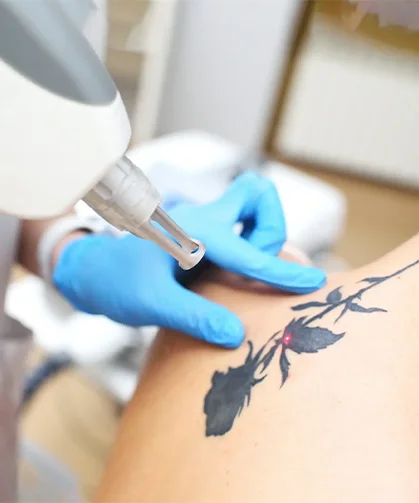
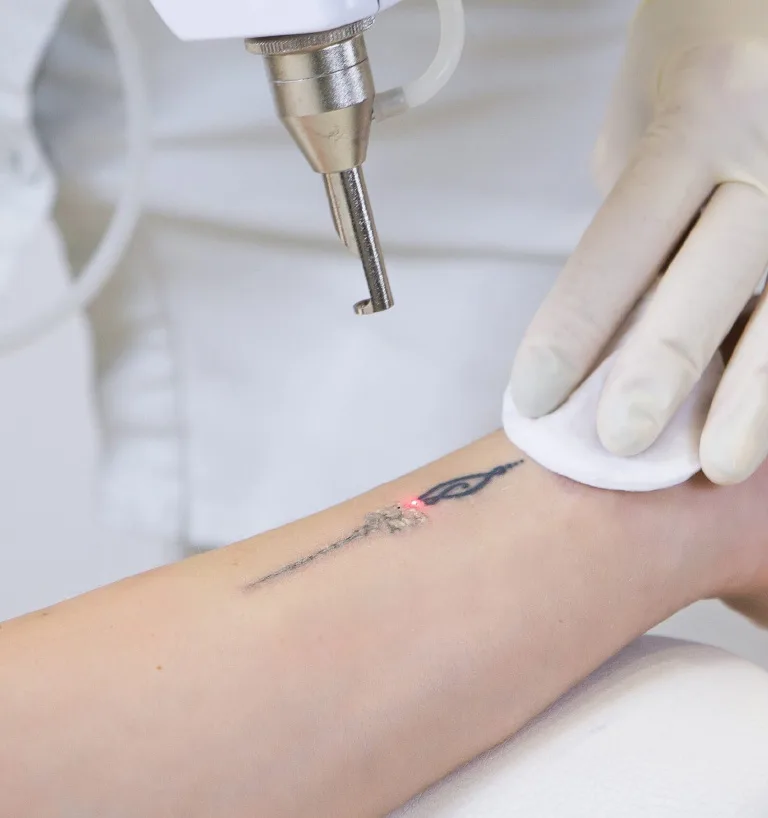
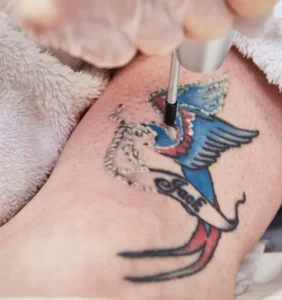
Laser tattoo removal is a non-surgical medical treatment that breaks tattoo ink into smaller particles so your body can clear them naturally. The laser sends very short pulses of light into the skin, and the ink absorbs this energy far more than the surrounding tissue. As the pigment receives that energy, it heats up for a split second and shatters into tiny fragments. Your immune system then removes those fragments over the following weeks.
Every ink color responds best to a specific wavelength. Black ink absorbs almost the entire spectrum, so it usually fades the fastest. Colors such as red, green, and blue need different wavelengths to break down properly. In a professional setting, your practitioner selects the right laser type, wavelength, and energy level for each part of your tattoo. This approach protects your skin while it helps the tattoo fade consistently from session to session.
At Serenity Clinic, we use FDA-cleared platforms such as Lutronic Spectra XT with Q-Switched technology to ensure safe removal across a wide range of ink colors and skin tones.
Comfortable, Non-Surgical Tattoo Removal Solutions
Laser tattoo removal avoids cuts, stitches, or surgical excision. You stay awake throughout the session. Most people describe the feeling as quick snaps on the skin with warmth in the area.
To keep you comfortable, the team can use:
- Strong cooling air or contact cooling on the skin
- Topical numbing cream when needed
- Short treatment blocks for larger tattoos, with breaks in between
You usually leave the clinic right after the session and return to normal daily tasks the same day, as long as you protect the treated area.
Benefits of Laser Tattoo Removal
- Laser technology now sits at the center of professional tattoo removal because it offers a strong balance between results and safety. You keep control over the pace of your journey and decide how far you want to go, from soft fading to near complete clearance in many cases.
Main benefits include: - Non-surgical approach that preserves the structure of the skin
- Targeted treatment for both black and colored ink
- Flexible planning for partial lightning or full removal
- Short treatment times per session
- Minimal downtime for most people
- Lower risk of scarring compared to older abrasive methods
- Compatibility with most body areas, including ankles, wrists, and neck

Laser Technologies in Serenity Clinic
Different tattoos demand different tools. Serenity Clinic uses a combination of Pico technology, Q-Switched lasers, and specific wavelengths such as Nd: YAG to treat a wide spectrum of inks. This range gives your practitioner more control over how deeply the energy travels and which colors it targets.
The main comparison sits between modern laser approaches and traditional surgical excision. Surgical excision removes the tattooed skin and closes the area with stitches. It suits very small tattoos only and always leaves a scar in place of the tattoo. Lasers, on the other hand, promote fading from within the skin while they preserve most of the surrounding tissue.
Difference Between Pico, Q Switch, and Surgical Excision
To make the options clearer, the table below compares popular methods.
| Method | How it works | Best for | Color response | Sessions needed | Downtime | Main advantages |
|---|---|---|---|---|---|---|
| Pico Laser | Ultra short pulses break ink into fine particles with strong photoacoustic impact. | Multicolored tattoos and resistant ink. | Excellent for black, blue, and bright tones. | Fewer sessions than older lasers. | Minimal redness for one to three days. | Fast fading and reduced heat damage. |
| Q Switched Laser | High energy pulses break pigment clusters layer by layer. | Deep black and dark blue tattoos. | Strong for dark shades, moderate for colors. | Multiple sessions required. | Mild redness or swelling for a few days. | Reliable and predictable clearance of dark ink. |
| Nd:YAG / Diode | Target specific pigments using selective wavelengths. | Red, orange and difficult green tones. | Very strong for resistant colors. | Several sessions depending on depth. | Minimal surface reaction. | Reaches colors other lasers struggle with. |
| Surgical Excision | Removes tattooed skin fully and closes with sutures. | Very small tattoos with loose skin. | All colors since skin is removed. | One procedure. | Days to weeks based on healing. | Immediate and complete removal. |
How Many Sessions Do You Need
Tattoo removal never follows a single pattern. A small black outline fades differently from a large multicolored design, so your practitioner gives you a range instead of a fixed number.
What shapes the number of sessions
- Size and location of the tattoo
- Depth and density of the ink
- Number and type of colors
- Age of the tattoo and any previous cover-ups
- Your skin tone and how your skin heals
- Lifestyle factors such as circulation and smoking
Professional tattoos usually contain dense pigment and need more visits. Older or amateur tattoos may fade faster. Areas with stronger blood flow, such as the upper arm or torso, often clear more easily than the ankles or hands.
What Makes It Safer Than Other Tattoo Removal Methods?
Other removal methods, such as dermabrasion, chemical peels, and home acids, work by removing layers of skin. These approaches can lead to scarring, textural changes, and unpredictable pigment loss. Surgical excision always leaves a line of scar tissue.
Laser tattoo removal focuses on the ink, not the entire skin layer. The practitioner follows strict eye protection rules, uses single-use consumables when needed, and cleans the area according to medical infection control standards. With correct technique and aftercare, most people experience only temporary surface reactions such as redness, mild blistering, or dryness.
What to Expect During Each Visit
Each session follows a clear structure. When you arrive with clean skin and remove any jewelry or clothing that covers the area.
We apply cooling or numbing for sensitive zones. The practitioner passes the laser over the tattoo in a controlled pattern.
You hear clicking sounds and feel quick snaps on the skin. Right after the passes, the area is cooled again and covered with a soothing product.
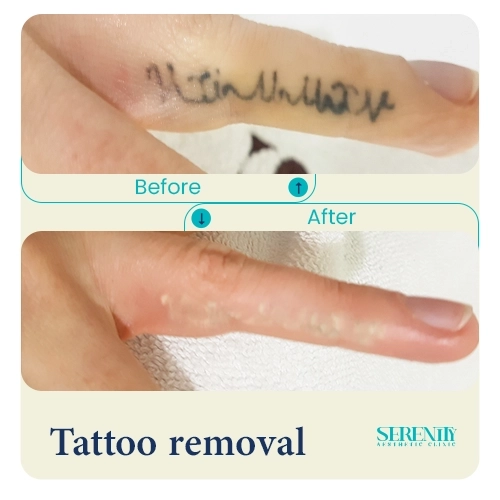
Before and After Results
Results never appear overnight, but they build steadily. After the first few sessions, you usually notice:
- Softer edges around the design
- Lighter zones inside solid blocks of color
- Changes in specific colors, for example, red areas fading before green
Some tattoos clear completely, while others leave a faint shadow or a gentle haze. The outcome depends on the original ink, its depth, and your individual healing pattern. Your practitioner keeps your expectations realistic and helps you understand what “best possible result” means for your specific tattoo.
Preparing for Your Tattoo Removal Session
Good preparation protects your skin and improves your results.
- What to Avoid Before Treatment
- For at least two weeks before your session, you usually need to:
- Avoid direct sun exposure on the tattoo
- Skip sunbeds and self-tanning products
- Avoid waxing, threading, or epilating the area
- Stop using strong exfoliating acids or retinoids on that patch of skin
Fresh tan increases the risk of pigment changes, so your natural skin tone helps your practitioner set safe energy levels.
Medications, Sun Exposure, and Skin Prep Guidelines
Always inform the clinic about your regular medications and supplements. Some drugs increase sensitivity to light, thin the blood, or slow healing. Your practitioner decides whether you need any temporary changes. If you currently take isotretinoin or receive other strong dermatologic treatments, you may need to wait before you start laser removal.
On the day of the session, clean the area with gentle soap and water. Avoid perfumes, deodorants, or heavy creams on the tattoo.
Before and After Results
You can follow your progress visually. The team at Serenity Clinic can capture clear before-and-after photographs at regular intervals. When you view these images or sliders, you see gradual lightening, changes in color intensity, and the difference between each stage of treatment. These visual records help you decide whether to continue, pause, or adjust your goal from full clearance to soft fading.
Laser Tattoo Removal Cost in Dubai
The cost of laser tattoo removal in Dubai depends on the size of the tattoo, the depth of the ink, the colors used, and the number of sessions you need. Larger or dense tattoos naturally take more time and more visits. Small or faded tattoos usually clear faster.
At Serenity Clinic, prices start from 400 AED per session. After your assessment, you will receive a clear plan that outlines the number of sessions you may need and how the overall cost is calculated. There are no surprises along the way, and you can adjust the plan if your tattoo fades sooner than expected.
If you want an exact quote for your tattoo, you can reach us on WhatsApp, and our team can guide you based on the size, color, and area you want to treat.
Skin Care Tips for Fast Recovery
Right after treatment, the area may look white, red, or slightly swollen. You can usually:
- Apply cool compresses at home for comfort
- Keep the area clean and dry for the first 24 hours
- Use the soothing ointment or cream recommended by your practitioner
- Avoid tight clothing that rubs on the tattoo
If small blisters appear, leave them intact and contact the clinic for advice instead of opening them yourself.
When to Resume Sun, Gym, or Shaving
You can usually return to light daily activity on the same day. For more intense habits, simple rules help:\
- Gym and heavy sweating: wait until the skin looks closed and calm, usually several days
- Swimming pools and hot tubs: avoid until the surface fully heals
- Shaving or waxing: resume only when the skin no longer feels tender
- Sun exposure: Protect the area with clothing or high SPF until your practitioner clears you, then continue sun protection long term to keep the skin tone even
The team at Serenity Clinic adapts these timelines to your skin type and your healing speed.
Why Choose Serenity Clinic for Tattoo Removal in Dubai?
Tattoo removal needs more than just a strong laser. It needs planning, judgment, and honest communication. At Serenity Clinic, the staff treats laser-based procedures every day and understands how different skins and inks behave over time.
The clinic focuses on:
- A calm and private environment
- Modern Pico and Q-Switched laser platforms
- Careful assessment before the first session
- Clear expectations about results and possible limitations
- Personal follow-up and support between visits
- Combination planning with other treatments when you need scar repair or resurfacing later
You do not walk through the process alone. The same team tracks your journey from the first consultation to your final session.
Our Expert Medical Team in Dubai
At Serenity Clinic, our expert doctors are passionate about creating safe, natural-looking results. You’re in trusted hands every step of the way.
Can I remove old or colored tattoos?
Yes. Old tattoos often respond very well because the body has already weakened the ink over time. Colored tattoos also respond, but they need specific wavelengths. The team may combine several lasers to treat complex designs.
Is laser tattoo removal permanent?
When your body clears the fragmented ink, that pigment does not return. Some very deep or dense tattoos may leave a faint trace. Your practitioner explains your likely endpoint during the consultation.
How many sessions will I need?
Most people need multiple sessions spread over several months. The exact number depends on your tattoo size, age, ink quality, colors, and skin response. You receive an estimated range, and the team updates it as they see your progress.
Does tattoo removal hurt?
The sensation feels different for everyone. Many people compare it to the feeling of a rubber band snap and warmth. Cooling devices and topical numbing cream make the session more comfortable, and the pulses pass quickly.
Related Articles: Body Treatment
العلاج عن طريق الحقن الوريدي , الحقن الوريدي للفيتامينات
العلاج عن طريق الحقن الوريدي (يُشار إليه اختصارًا باسم العلاج...
Filler or Botox for upper lip
While filler injection is commonly used to address concerns related...
What is IV Vitamin Drips?
You have asked What is IV Vitamin Drips ? In...
How testosterone affects your appearance
You've already learned how the hormone testosterone affects everything from...
Selecting the best hair-removal laser clinic
Consumers are being bombarded with exclusive offers for the removal...
underarm Botox
Underarm Botox treatment is highly effective, non-invasive, and quick. Underarm...
Slimming with rf device Best For 2025
Slimming with rf device The body alone has an amazing...
Familiarity with nail diseases
Familiarity with nail diseases : Healthy nails have a clear...
Botox for smile line removal
Botox for smile line removal ? One of the effects...